1841
Nelahozeves
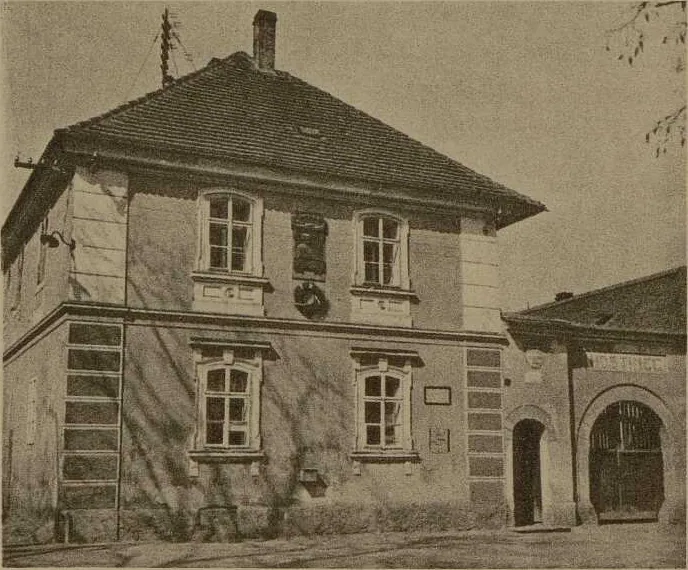
Antonín Dvořák was born on 8 September 1841 in Nelahozeves on the Vltava, the first of nine children. His father, František, was a butcher and innkeeper who played the zither; his mother, Anna, née Zdeňková, came from Uhy.

Symphony No. 9 ‘From the New World’ — Largo
The music never starts on its own. The recordings are public-domain works from Wikimedia Commons.
An intimate exhibition devoted to Antonín Dvořák in the heart of Prague.
Enter the storyThe living archive
Photographs, letters and manuscripts lie on the archivist’s desk. Choose an exhibit and guide the light across it — out of the half-light emerge faces, handwriting and details that would easily be missed on a wall.
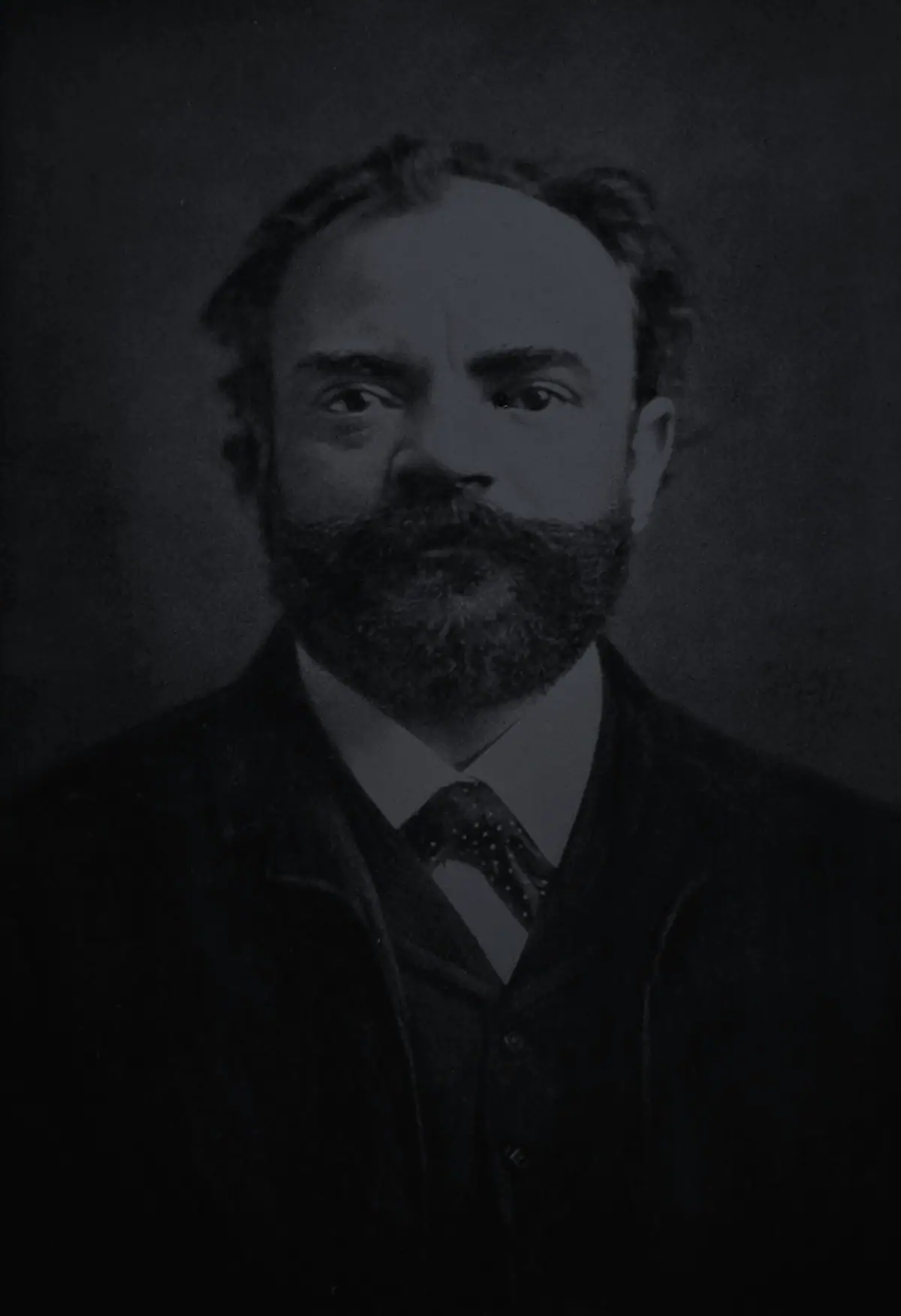
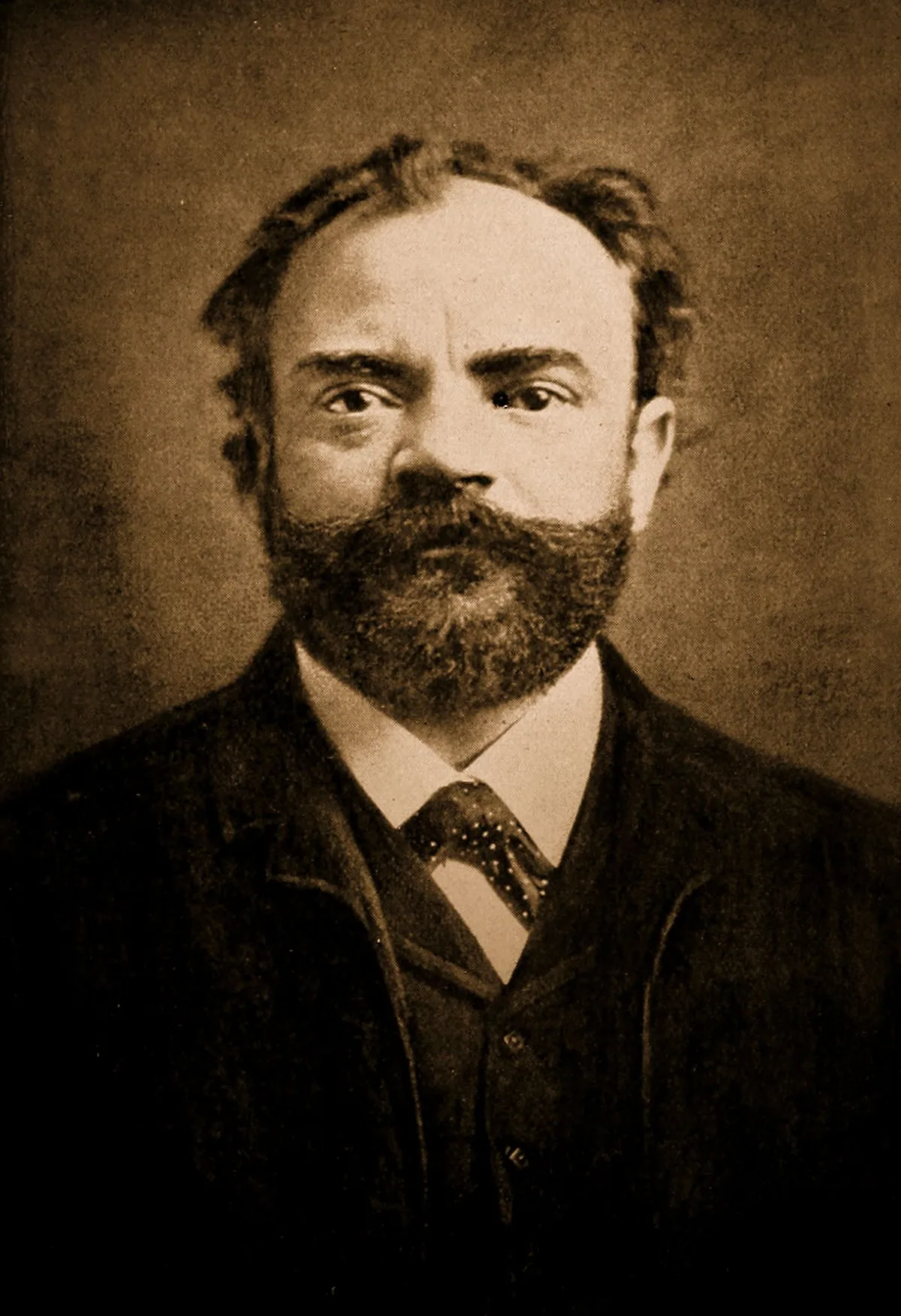
A photograph from the summer of 1870. Dvořák was twenty-eight, played the viola in the orchestra of the Provisional Theatre, and his compositions were still known only to a small circle of Prague listeners.
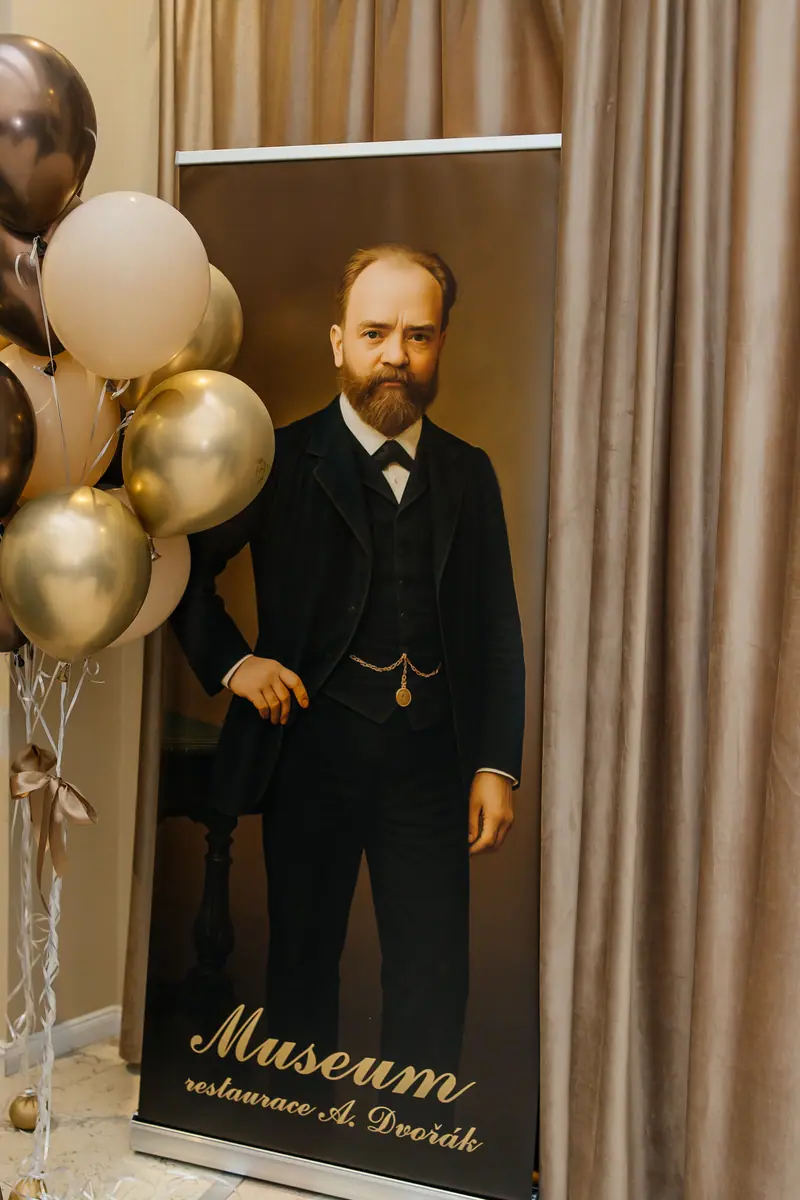
In the restaurant you will see this likeness in colour — colourised with modern technology. Here you uncover it with light. It is not a colour photograph of the period.
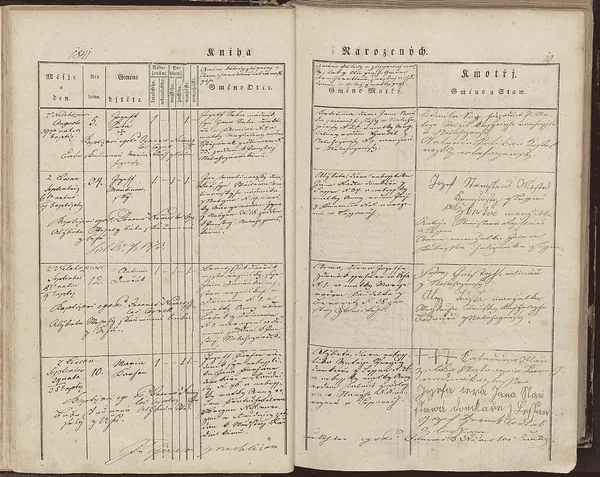
The parish register entry of his birth. Antonín Dvořák was born on 8 September 1841 in Nelahozeves, in house No. 12, the first of the nine children of František and Anna Dvořák.
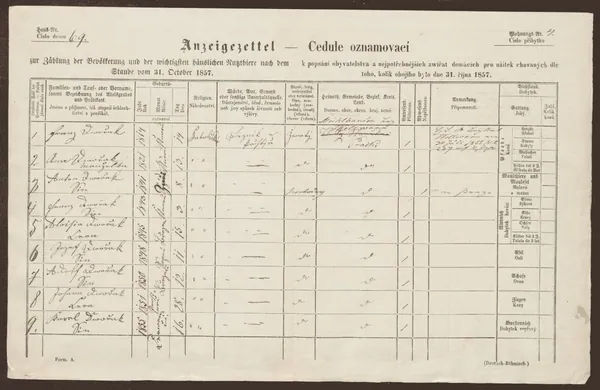
A sheet from the 1857 census for house No. 69 in Zlonice, where the Dvořák family was then living and keeping an inn. The sixteen-year-old Antonín is entered on it too.
In Zlonice he was taken under the wing of the teacher and organist Antonín Liehmann, who led him to the organ, the piano and the violin, and to music theory.
Josefína Čermáková, a stage actress. The young Dvořák earned extra money by giving piano lessons and fell in love with his pupil Josefína — but she did not return his feelings.
On 17 November 1873 he married her younger sister, Anna. Josefína married Count Václav Robert Kounic; the Dvořáks often stayed on their estate at Vysoká near Příbram.
Antonín and Anna Dvořák in London in 1886. From 1884 onwards Dvořák travelled to England again and again, conducting his own works there.
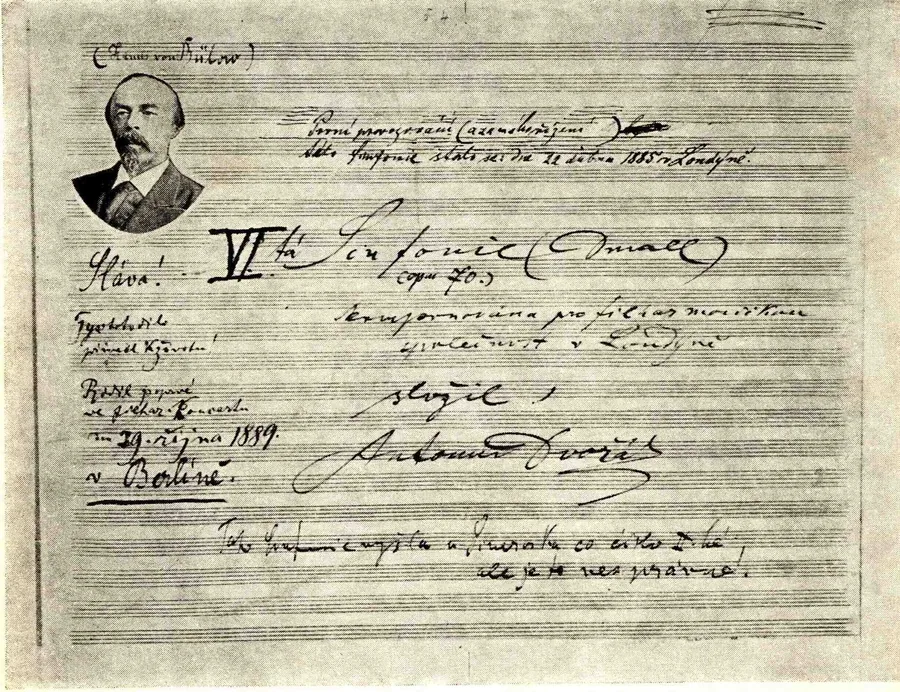
For the Philharmonic Society of London he wrote his Symphony No. 7, and in April 1885 he conducted its première at St James’s Hall.
Dvořák in the doctoral gown of the University of Cambridge, which awarded him an honorary doctorate in 1891. The university in Prague also made him an honorary doctor.
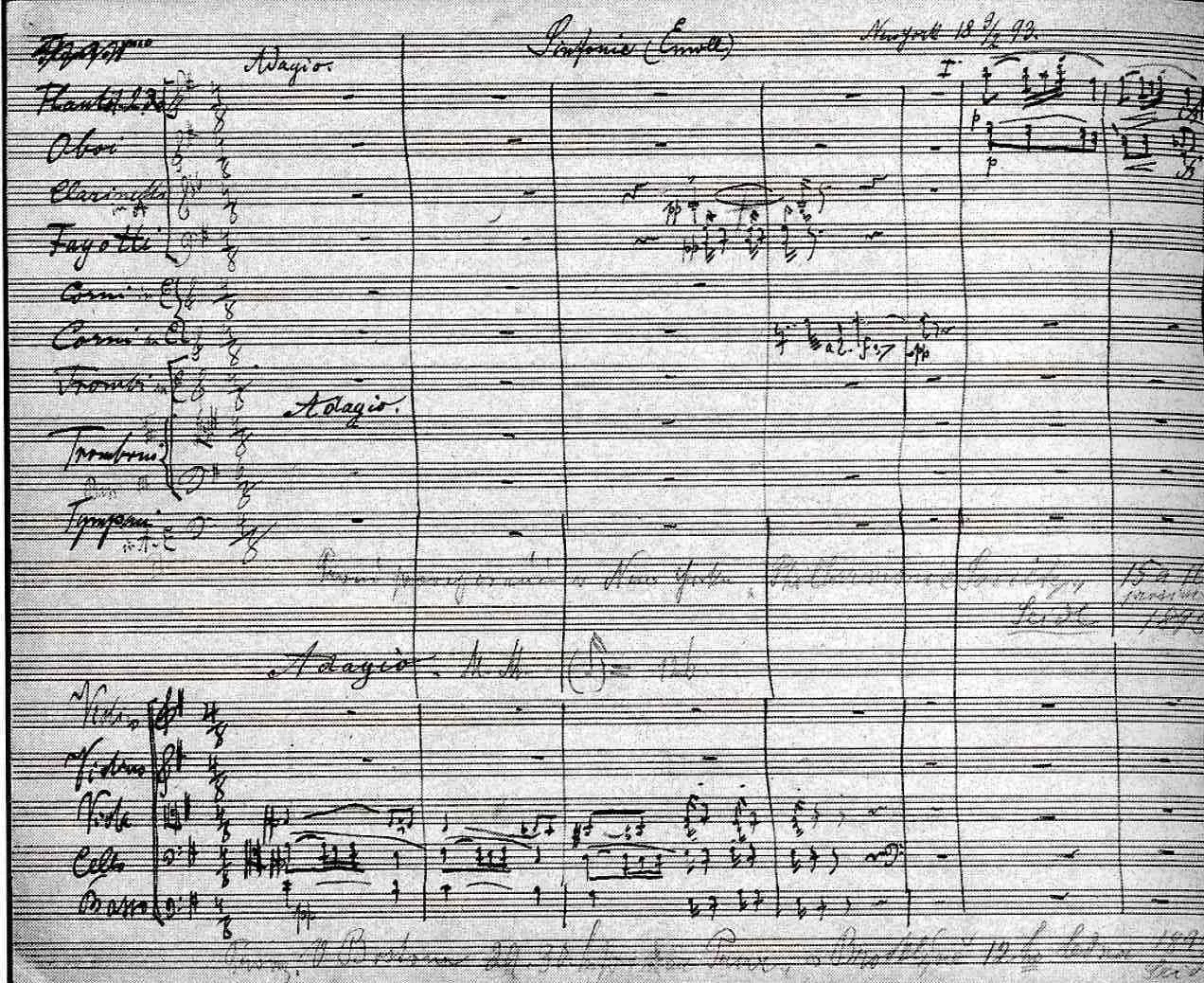
The first page of the autograph score of Symphony No. 9 in E minor, ‘From the New World’. Dvořák wrote it in New York between January and May 1893.
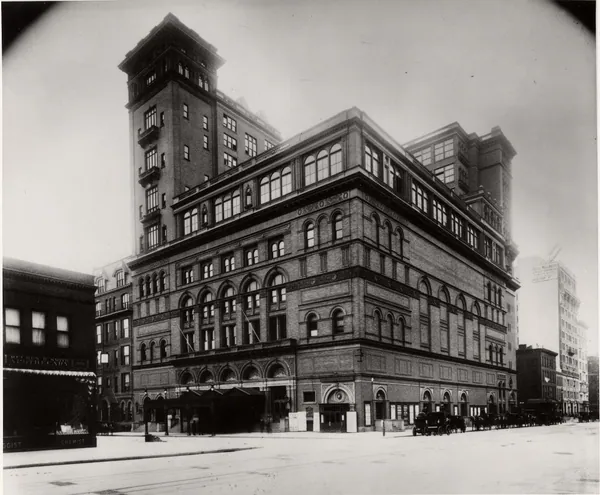
Its première took place on 16 December 1893 at Carnegie Hall under the baton of Anton Seidl, and it was one of the greatest triumphs of his life.
A postcard that Dvořák sent from Chicago on 11 August 1893 to his friend Emil Kozánek, a lawyer in Kroměříž — his name stands in the address.
In the same year he conducted his Symphony No. 8 at the World’s Fair in Chicago.
A page of a letter that Dvořák wrote in Prague on 19 April 1886. In it he writes: „Papa Beethoven, jehož obraz nad mým psacím stolkem visí…“
In English: ‘Papa Beethoven, whose picture hangs above my writing desk…’
A cabinet photograph from J. Mulač’s studio in Prague, to which Dvořák added a musical quotation and his signature in his own hand on 24 April 1903 — about a year before his death on 1 May 1904.
The reproductions come from publicly accessible collections (Wikimedia Commons, the State Regional Archives in Prague and the State District Archives in Kladno). The colour layer on exhibit 01 is a modern colourisation displayed in the restaurant.
Hall I · Childhood and family
Antonín Dvořák’s early years — the atmosphere of the home he was born into, his parents František and Anna, and the places that shaped his character.
1841
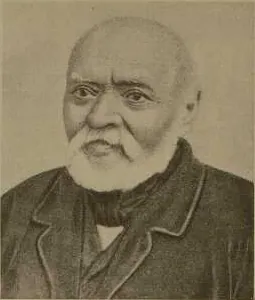
Antonín Dvořák was born on 8 September 1841 in Nelahozeves on the Vltava, the first of nine children. His father, František, was a butcher and innkeeper who played the zither; his mother, Anna, née Zdeňková, came from Uhy.
1847
In 1847 he started school and learnt the violin under the guidance of the teacher Josef Spitz.
During his childhood Nelahozeves gained a railway station — and a love of trains stayed with him all his life.
1853–1859
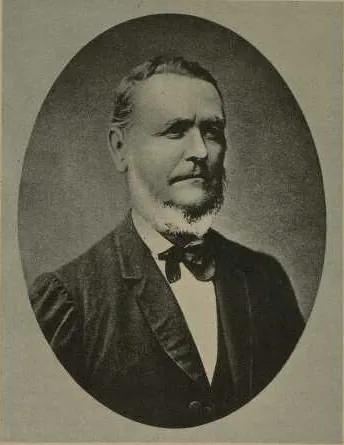
In 1853 he moved to Zlonice. There the teacher and organist Antonín Liehmann taught him music theory and the violin, piano and organ.
In 1857 he went to Prague to study at the Organ School, from which he graduated in 1859.
Hall II · Creative path and acclaim
Portraits, documents, scores, and honours at home and abroad — the story of a talent that was celebrated in his own lifetime and became immortal.
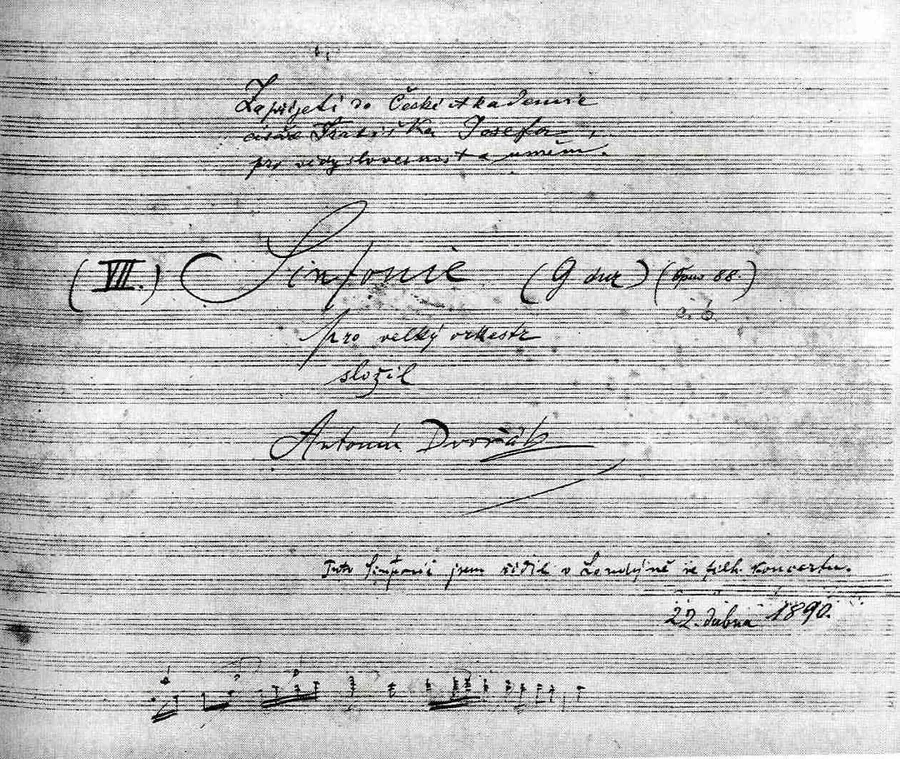
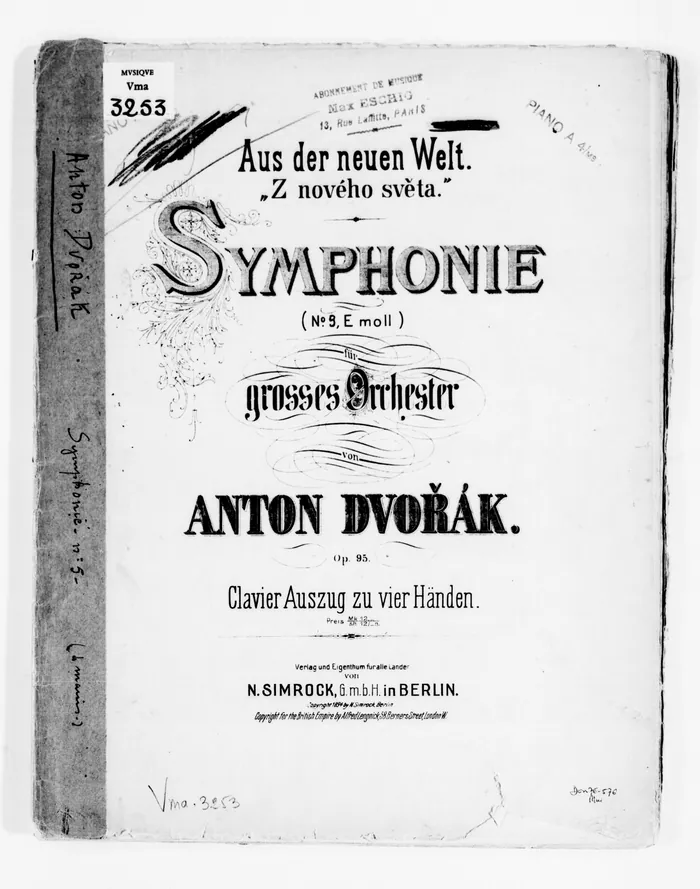
Viola player in the orchestra of the Provisional Theatre, conducted from 1866 by Bedřich Smetana.
An Austrian state stipend for young composers.
On the recommendation of Johannes Brahms, the Berlin publisher Fritz Simrock brings out his Slavonic Dances.
Conducts his Stabat Mater at the Royal Albert Hall in London.
Première of Symphony No. 7 at St James’s Hall in London.
An honorary doctorate from the University of Cambridge; the university in Prague also made him an honorary doctor.
Director of the National Conservatory in New York.
On 16 December Symphony No. 9 ‘From the New World’ is heard for the first time at Carnegie Hall.
The Literis et artibus decoration.
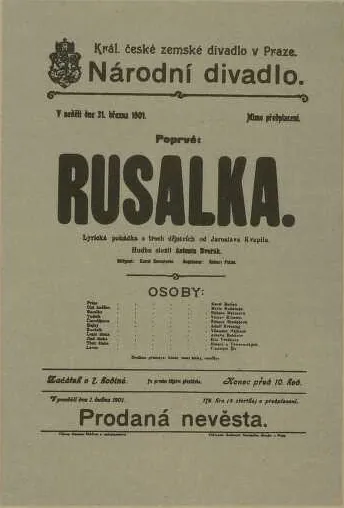
Première of Rusalka at the National Theatre; director of the Prague Conservatory and a life member of the House of Lords (Panská sněmovna).
The light above the manuscripts will breathe with the music.
Intermezzo
Four things lie on the writing desk. Pick one up and let it tell its story.
Postcard · Spillville, Iowa
Dvořák spent the summer of 1893 with his whole family in the Czech settlement of Spillville, the home town of his secretary Josef Jan Kovařík. He called the quiet little town his summer ‘Vysoká’; the American Quartet and the String Quintet in E flat major were written here.
On the back of a postcard of the church and school in Spillville, Dvořák wrote in Prague on 6 October 1894: „V tomto kostelíčku jsem často a rád hrával na varhany…“
In English: ‘In this little church I often and gladly played the organ…’
Postcard of the church and school in Spillville, front and back · Sborník k oslavě stoletých narozenin Antonína Dvořáka (a volume marking the centenary of his birth), 1941 · Wikimedia Commons (CC0)
Manuscript · Spillville 1893
In June 1893, in Spillville, Dvořák was writing his String Quartet in F major, known today as the ‘American’. On the last page of the manuscript he added: „Zaplať Pán Bůh. Dokončeno 10. 6. 1893. Jsem spokojen. Šlo to rychle.“
In English: ‘Thank God. Finished 10 June 1893. I am satisfied. It went quickly.’
You can play the slow movement of this quartet in the music player.
The last page of the autograph score with Dvořák’s inscription · J. Burghauser: Antonín Dvořák · Wikimedia Commons, public domain
Letter · 1889
Dvořák was a friend of the Russian composer Pyotr Ilyich Tchaikovsky. At his invitation he gave concerts in Moscow and St Petersburg in 1890.
Letter from P. I. Tchaikovsky to A. Dvořák, 1889 · Wikimedia Commons, public domain
Map · 1892
In 1892 he accepted Jeannette Thurber’s offer and became director of the National Conservatory in New York. He held the post until the spring of 1895.
Choose an object on the desk.
The objects on the desk are an artistic metaphor; they do not mean that their originals are part of the exhibition. The reproductions of documents come from public collections.
Hall III · Family and private life
His wife Anna and nine children. The family photographs evoke the atmosphere of a home that is the key to understanding the humanity and depth of his music.
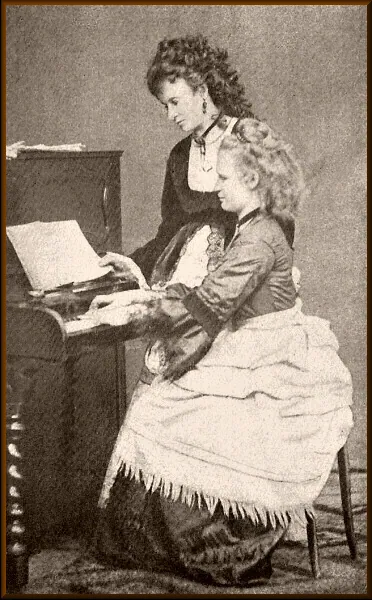
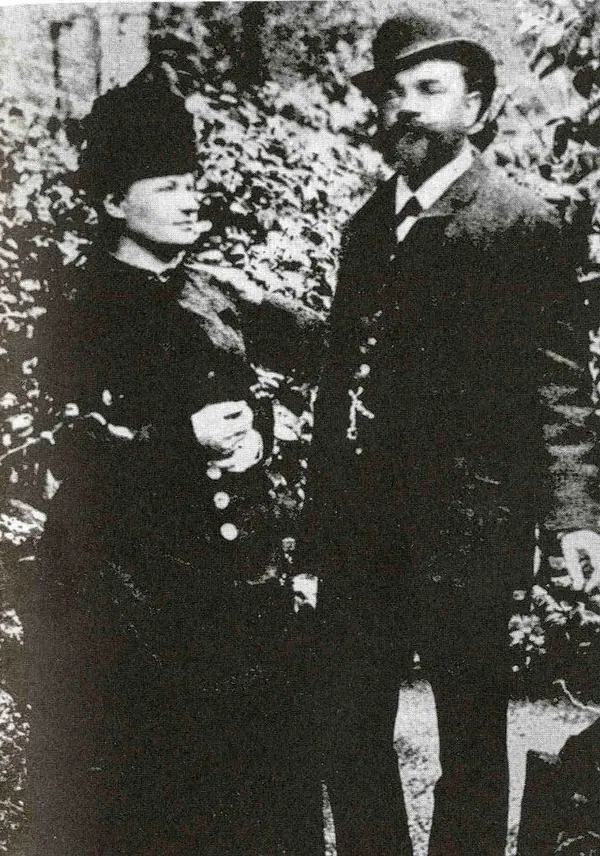
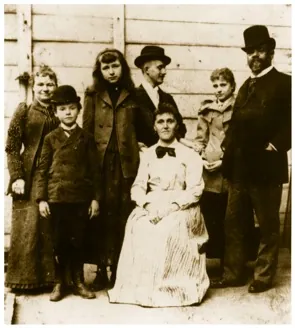
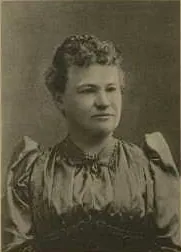
On 17 November 1873 Antonín Dvořák married Anna Čermáková (1854–1931). They had nine children; the three eldest died in early childhood.
Among his great passions were railways and breeding pigeons. The family spent the summer months at Vysoká near Příbram, where Dvořák converted an old granary into a summer residence — there he tended his orchard, kept pigeons and composed.
Josefína, his first love and later his sister-in-law, wrote to him in November 1894 that she was seriously ill. Into the finale of his Cello Concerto in B minor he then wove a quotation from his song „Kéž duch můj sám“ (‘Leave Me Alone’), which she loved. After her death in May 1895 he revised the ending of the concerto once more.
Hall IV · Dvořák and the world
The places where Dvořák performed and taught — from London to New York, from Prague to Spillville. Choose a place on the map.
Bohemia · Prague
From 1877 to 1904 Dvořák lived in the house U Bílého lva (At the White Lion) in Žitná Street. In Prague he played in the orchestra of the Provisional Theatre, taught at the Conservatory, and in 1901 his Rusalka had its première here.
Poster for the première of Rusalka, 1901 · Wikimedia Commons (CC0)
England · London
The success of his Stabat Mater in London opened England’s doors to Dvořák: in 1884 he conducted it at the Royal Albert Hall, and a year later he conducted the première of his Symphony No. 7 in the city. He visited Britain at least eight times, the last in 1896, when he conducted the première of his Cello Concerto in London.
With his wife Anna in London, 1886 · Wikimedia Commons, public domain
USA · New York
From 1892 to 1895 he directed the National Conservatory of Music founded by Jeannette Thurber. In New York he wrote Symphony No. 9 ‘From the New World’ — first performed at Carnegie Hall on 16 December 1893 — as well as the Cello Concerto in B minor.
Carnegie Hall, 1899 · Wikimedia Commons, public domain
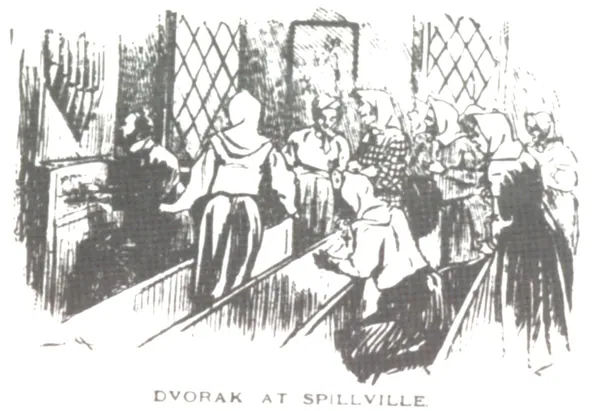
USA · Iowa
He spent the summer of 1893 with his family in the Czech settlement of Spillville, the birthplace of his secretary Josef Jan Kovařík. Here he composed the String Quartet in F major, the ‘American’, and the String Quintet in E flat major.
The drawing ‘Dvorak at Spillville’ · Spillville town archive · Wikimedia Commons, public domain
Choose a place on the map or in the list.
The gold lines connect places; they do not show the exact routes travelled. Coastlines from Natural Earth (public domain), without today’s national borders.
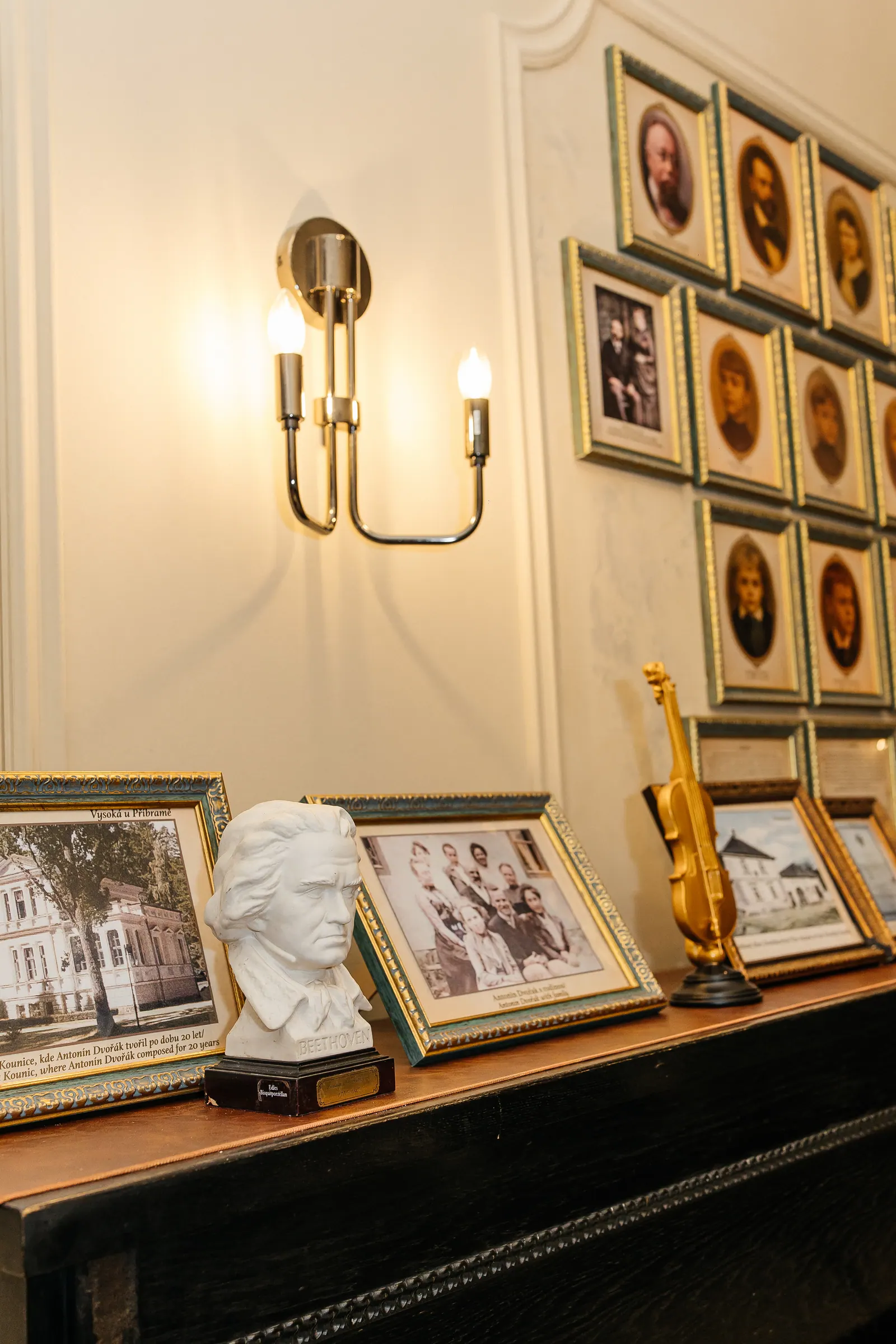
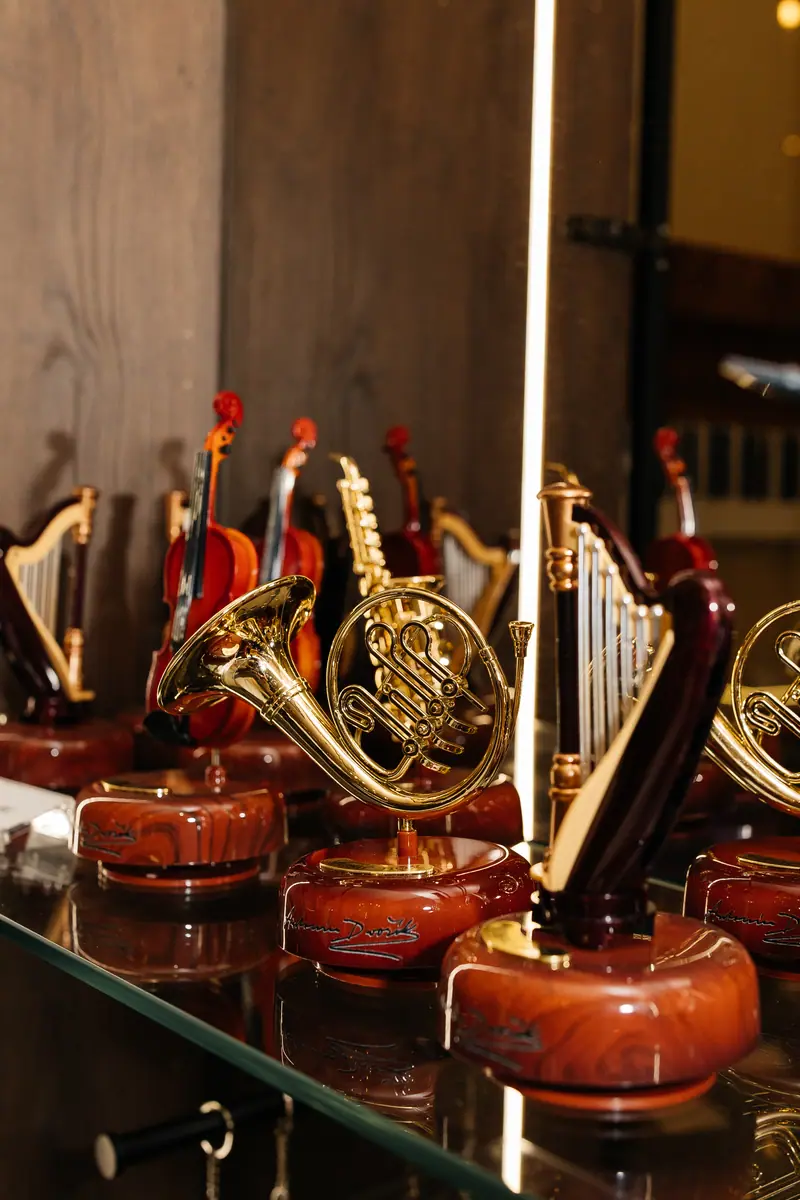
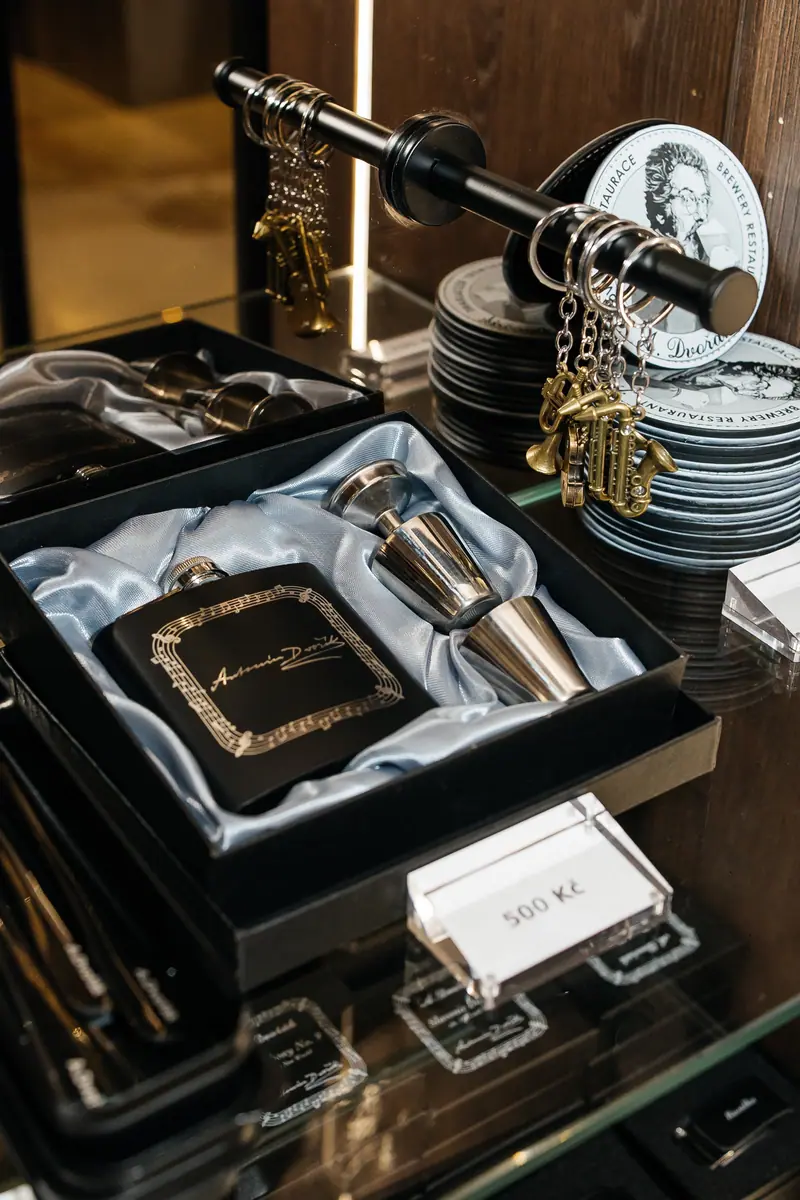
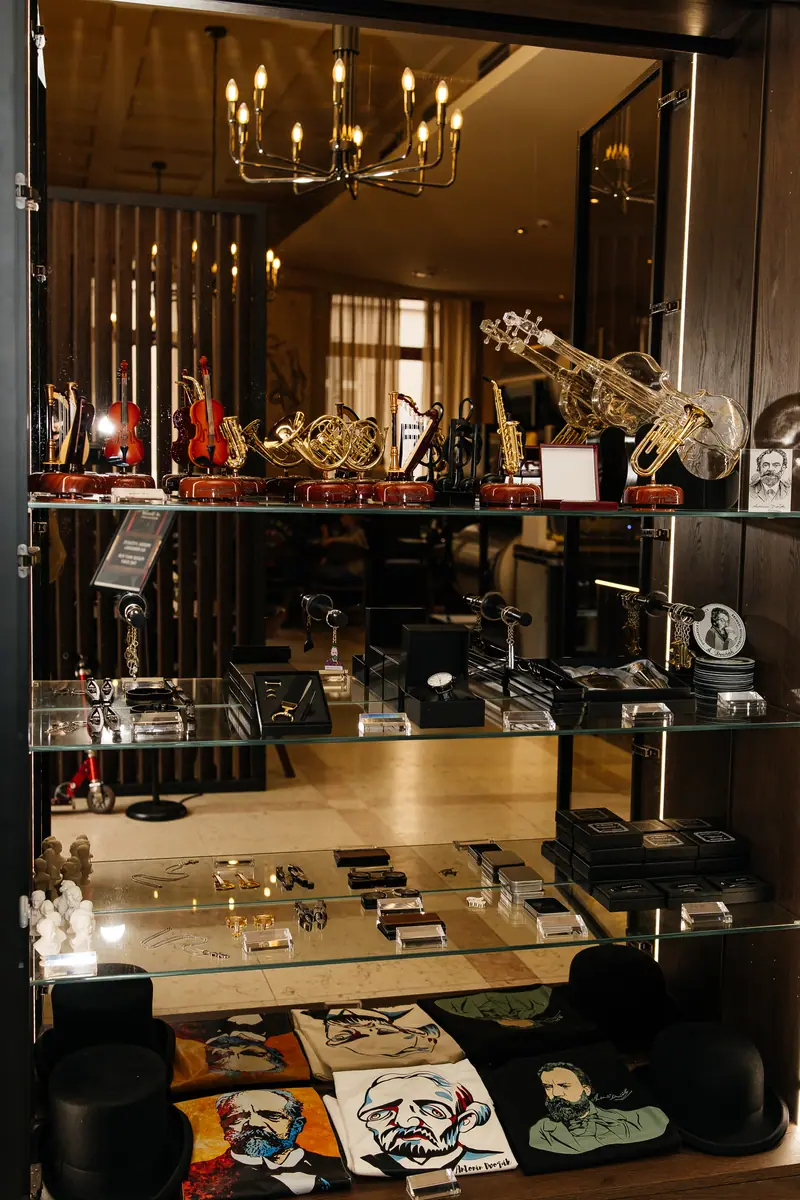
The exhibition in the restaurant
Discover the world of Antonín Dvořák right here in our restaurant.
The exhibition at Restaurace A. Dvořák · photograph by the restaurant
Your visit
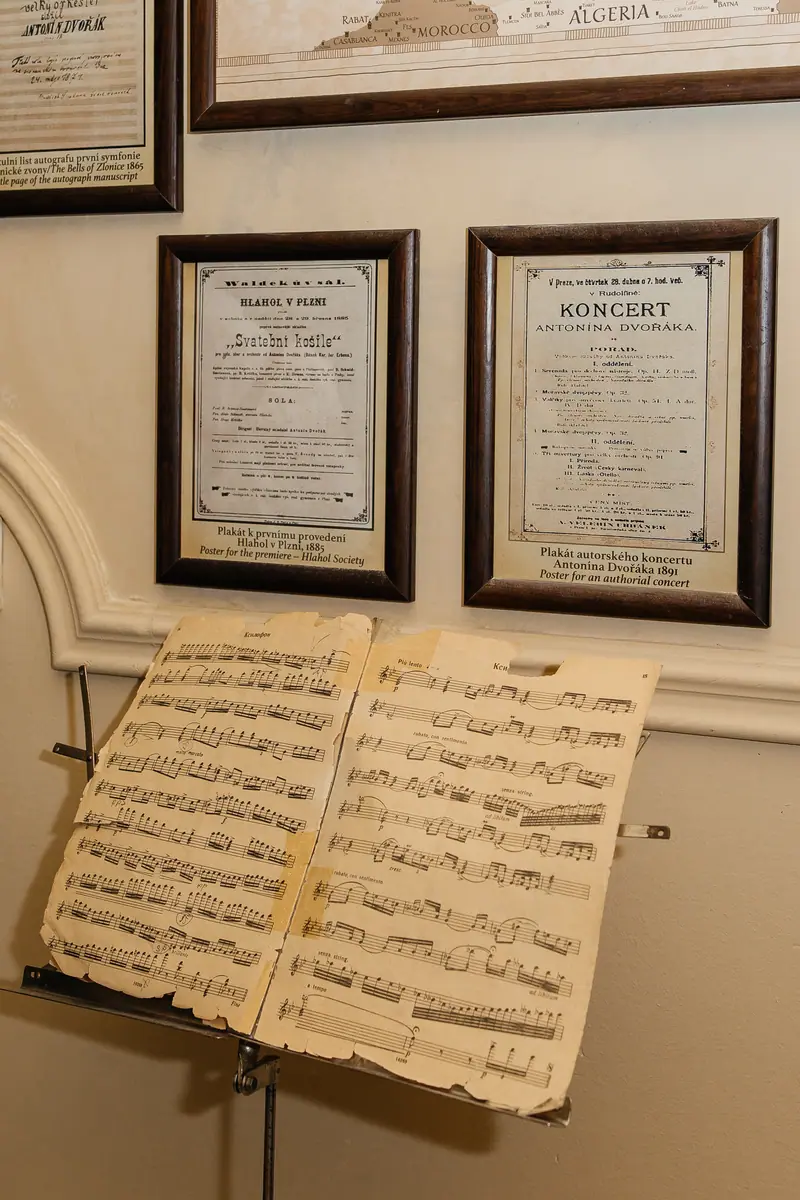
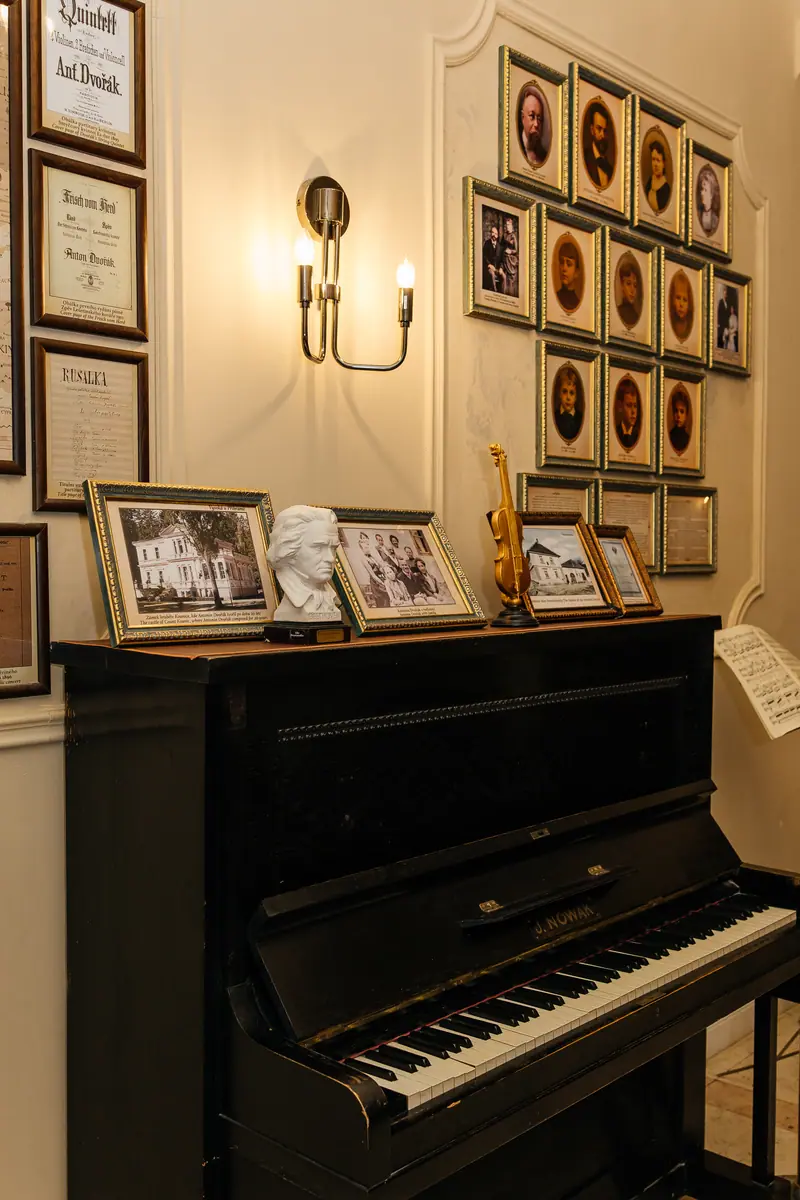
Archive reproductions: Wikimedia Commons and the archives named (public-domain works); photographs of the exhibition: Restaurace A. Dvořák; music: public-domain works from Wikimedia Commons.
Light up the memory